
EV Charging Systems and the Case for Dedicated Protection

Electric Vehicle Charging Fire Suppression Systems
As EV charging continues to develop at pace, this blog explores the emerging safety considerations around charging installations and what they could mean for future protection approaches.
Bringing EV Charging Protection to the Market: A Data-Driven Safety Imperative
The rapid expansion of electric vehicle (EV) charging infrastructure is reshaping transport and the built environment. Global EV stock exceeded 40 million vehicles in 2023, with public and private charging installations growing at double-digit rates year on year. However, the protection of charging infrastructure has not evolved at the same pace as deployment, creating a growing technical and operational risk.
EV charging environments introduce a unique fire risk profile. High-power DC fast chargers operate at voltages up to 1,000 V and currents exceeding 500 A, generating sustained thermal loads over extended charging periods. Fault conditions- such as connector degradation, cable damage, battery management system failures, or poor thermal dissipation- can result in localised overheating long before conventional fire detection thresholds are reached.
Available incident data shows that while EV-related fires remain statistically rare, when they occur they are disproportionately complex. Thermal runaway events can reach temperatures above 1,000°C, release flammable and toxic gases, and persist through re-ignition cycles lasting several hours. In enclosed or semi-enclosed charging locations- car parks, depots, logistics hubs- these characteristics significantly increase the risk of structural damage, asset loss, and prolonged site shutdown.
Traditional fire suppression systems were not designed for these conditions. Point heat detectors and standard smoke detection often respond too late, while water-based suppression can be ineffective or operationally impractical around high-voltage electrical equipment. In many cases, the focus has been on protecting the building, not the charging asset itself- leaving chargers, power electronics, and adjacent vehicles exposed to escalating failure.
Bringing EV charging protection to the market requires a shift toward purpose-engineered solutions. Effective systems must provide early-stage detection at the point of risk, identify abnormal thermal behaviour before open flame develops, and deliver fast, localised suppression that prevents escalation without damaging surrounding infrastructure. Reliability, low maintenance, and compatibility with live electrical systems are critical design requirements.
From a risk management perspective, the data is compelling. Studies consistently show that early detection and targeted suppression dramatically reduce fire growth rates, limit secondary damage, and shorten recovery times. For charging operators, this translates directly into improved asset availability and lower lifecycle costs. For insurers and regulators, it offers a credible pathway to managing emerging EV risks without imposing restrictive deployment constraints.
As EV charging transitions from pilot projects to critical national infrastructure, protection strategies must be treated as an integral system component rather than an optional add-on. Bringing robust EV charging protection to the market is not simply a response to isolated incidents- it is a proactive, data-driven approach to supporting safe, scalable electrification at speed.
Related News
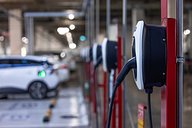
EV Charging and Infrastructure Protection
With automatic detection and activation, tailored active fire protection systems can suppress electrical fires in cabinets or in EV charging stations, without human intervention.

Transport
Fires in transport vehicles like lorries and vans can have serious implications for your business. Discover Ardent's bespoke fire suppression system design and installation.

Bus and Coach
Active fire protection systems to safeguard buses, coaches, people and public transport operations.